About Marrowbone
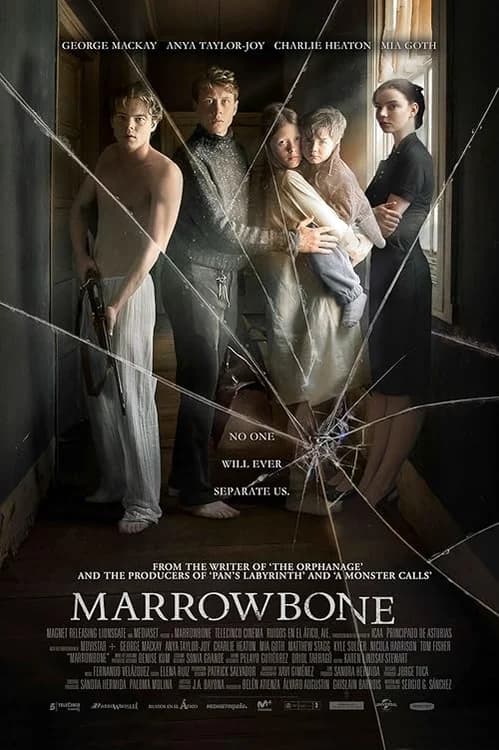
Marrowbone (2017) is a beautifully crafted gothic horror mystery that masterfully blends psychological tension with emotional drama. Directed by Sergio G. Sánchez in his feature debut, this Spanish-American co-production follows Jack and his three younger siblings as they conceal their mother's death to avoid separation, all while grappling with a malevolent force in their decaying family manor.
The film's strength lies in its atmospheric dread and strong performances, particularly from George MacKay as the protective older brother Jack and Anya Taylor-Joy as the compassionate neighbor Allie. Sánchez, who wrote The Orphanage, demonstrates his skill at building tension through subtle visual cues and a haunting score that enhances the creeping sense of unease.
What makes Marrowbone particularly compelling is its dual narrative structure—operating simultaneously as a ghost story and a psychological exploration of trauma and grief. The sprawling manor becomes a character itself, with its hidden rooms and secrets mirroring the family's concealed truth. The film's gradual revelation of what truly haunts the Marrowbone family creates a satisfying narrative puzzle that rewards attentive viewers.
Viewers should watch Marrowbone for its elegant approach to horror, prioritizing character development and emotional stakes over cheap scares. The cinematography creates a palpable sense of isolation and decay, while the period setting adds to the gothic atmosphere. This is a thinking person's horror film that explores how family secrets can manifest in terrifying ways, making it perfect for fans of atmospheric, character-driven thrillers with genuine emotional weight.
The film's strength lies in its atmospheric dread and strong performances, particularly from George MacKay as the protective older brother Jack and Anya Taylor-Joy as the compassionate neighbor Allie. Sánchez, who wrote The Orphanage, demonstrates his skill at building tension through subtle visual cues and a haunting score that enhances the creeping sense of unease.
What makes Marrowbone particularly compelling is its dual narrative structure—operating simultaneously as a ghost story and a psychological exploration of trauma and grief. The sprawling manor becomes a character itself, with its hidden rooms and secrets mirroring the family's concealed truth. The film's gradual revelation of what truly haunts the Marrowbone family creates a satisfying narrative puzzle that rewards attentive viewers.
Viewers should watch Marrowbone for its elegant approach to horror, prioritizing character development and emotional stakes over cheap scares. The cinematography creates a palpable sense of isolation and decay, while the period setting adds to the gothic atmosphere. This is a thinking person's horror film that explores how family secrets can manifest in terrifying ways, making it perfect for fans of atmospheric, character-driven thrillers with genuine emotional weight.